
On September 23, 2014, I published my second novel, Lost Dogs. It has become my most popular book by far, selling thousands of copies, having over a million Kindle pages read, and earning hundreds of ratings. Not bad for a quirky and challenging post-apocalypse book by a no-name, indie author from Maryland’s Eastern Shore.

Year after year, Lost Dogs continues to sell well, gaining more fans and reviews on Amazon and Goodreads. The only area where it doesn’t outperform my other books is at comic cons, where its follow-up, Stray Cats, rules: con people are cat people, I’ve learned.

But if you polled my readers, the majority of them would say that Lost Dogs is their favorite book of mine. I’ve even had a few say that it is their favorite book of all time, which is…mindblowing, and very flattering. Thank you to everyone who’s bought and read it.
How It Began
In either late 2010 or early 2011 (I don’t remember exactly when), after I had finished drafting Dragontamer’s Daughters (which I would publish in 2012), I was dogsitting for my folks at their house. While I was hanging out with their puppers, I turned on the TV, and caught an episode of a History Channel show called Life After People.
The premise of this speculative documentary was, what would happen to the world if humans suddenly disappeared? How long would the power stay on, how long would our cars be able to start, how long would our buildings stand? And, in the episode I watched, what would happen to our pets?
The segment on dogs was only about three minutes long, but it inspired me. I got to work on Lost Dogs right away.
Writing Lost Dogs
Which is not to say that I wrote the book quickly. I’m very slow because I have a lot of distractions (wife, kids, pets, full-time job, house, volunteer work, hobbies), and because I’m very meticulous (which I developed under the tutelage of author and professor J.R. Salamanca). I plan out almost every plot element, I put a lot of thought and effort into creating characters, and I edit as I go, which makes the initial draft take longer, but saves a lot of time on the back end of publishing the book.
And for Lost Dogs, I did a lot of research on canine biology, particularly their breed characteristics, their intelligence, their emotional capacity, and how they perceive the world through their senses. I’ve had many readers tell me that Lost Dogs really made them understand and empathize with their pets much better; I know it has for me, too.

Because of all the zoology that went into Lost Dogs, I consider it a “science fiction” book. When I mention that to people, some of them think “dogs in space,” or “dogs with laser guns,” but that’s not what I mean.*
*And no, it’s not “sci-fi” because of the “aliens” that wipe out the people–those might not be “aliens” at all, because it’s never definitively stated in the book what they are. See below for more about them.
Lost Dogs and Literature
Before I began writing Lost Dogs, I visited (and revisited) several books for inspiration. Among them were Jack London’s The Call of the Wild, which, if you don’t remember it from middle school or high school, is just brutal. I also reacquainted myself with William Golding’s Lord of the Flies, which becomes particularly relevant later in Lost Dogs.

Stephen King’s The Stand (my favorite of his) is very large in scope, with dozens of characters and a plot spanning the entire United States; I decided to make my “end-of-the-world” story much smaller, restricting it to a handful of dogs, and Kent Island, Maryland.*
*KI is where I live. I figured that if Stephen King can set a lot of his novels in his home state of Maine, I could do something analogous with Lost Dogs.
Finally, Richard Adams’ Watership Down and The Plague Dogs were crucial influences, particularly the former, believe it or not. The “Canine Language” of Lost Dogs was inspired by how the WD rabbits speak. For better or for worse, Watership Down also persuaded me to pull few punches in showing just how cruel Nature can be. Lost Dogs truly is a “dog-eat-dog” world.
The Dogs of Lost Dogs
Many readers have gushed to me that they love the characters in the book, that so-and-so reminds them exactly of a dog they have or had years ago. The basis for each dog’s character is their breed:
- Buddy, a German Shepherd, is brave, loyal, and protective.
- Sally, a Beagle/Basset mix, is kind, playful, easy-going, and prone to wandering off.
- Rex, a Border Collie, is extremely intelligent, agile, and energetic; and is very intense.
- Jake, a Rottweiler, though outwardly intimidating, is quiet, and a gentle soul.
- Penny and Poppy, both Pomeranians, are sassy, believing themselves to bigger dogs than they are.
And so on.
Many animal books anthropomorphize their characters, allowing them to think, and communicate, and feel emotions in ways very similar (if not identical) to humans. And then it’s very typical of these books to fall into some lazy stereotypes that sometimes drip with bogus sentimentality.
For example, in pop culture, dogs are often portrayed either as clownish simpletons doing silly things; or they’re cast as deeply devoted to their owners, loving them more intensely and with more loyalty than any human could. How many times HAS Lassie saved little Timmy, anyway?
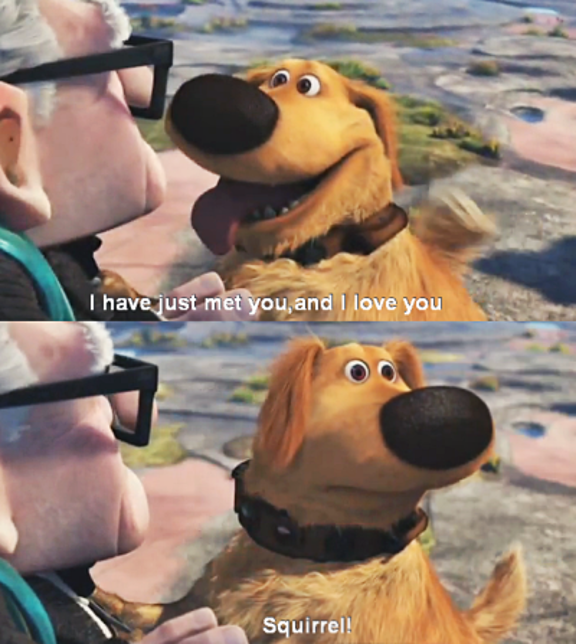
For my Lost Dogs, I took a more nuanced approach. The dogs occasionally do typical silly “doggy” things as part of some lighter, funnier moments, but the dogs themselves are not played for laughs.
And yes, some of them are very attached to their people: Buddy is convinced that his owners have survived the catastrophe at the beginning of the novel, and he spends much of the story searching for them. Some of the other dogs, however, are not nearly so eager to be reunited with their masters, and at least one is glad to be rid of them….
Lost Dog’s Theme
I tried to portray the dogs in the book as very much being real dogs, but they have a lot of human elements, too. Not just names (Sally, Rex, Lil, Jake, Penny, Greta, Tess, Zeke), but hopes, fears, desires, worries, emotions, habits, etc. I did that so that readers can relate to them as more than just animals.
That’s important because the book’s theme is abandonment, and how one copes with it. Buddy refuses to accept it: throughout the whole story, he is driven to reunite with his human family. Sally deals with it and moves on. Rex and Lil become resentful and hateful.
My father abandoned me when I was 13. I didn’t hear from him for over a dozen years, and I never saw him again after 1978. It was very traumatic for me, and it wasn’t until his death in 2014 (about six months before Lost Dogs was published), that I got over it.
Of course, I’m not the only one who has ever suffered like that: my father was abandoned by his father when he was a child. Lost Dogs gave me the opportunity to explore and express all the feelings I had, and share them with readers, many of them teenagers, like I was when it happened. That’s why I say that Lost Dogs is a “young adult” book.
Speaking of “Abandonment”…
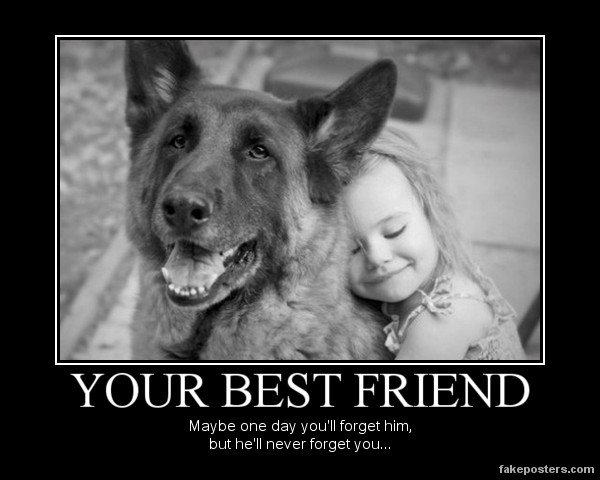
Very early in the writing of Lost Dogs, I came across this meme, which directly inspired the relationship between Buddy and the girl Audrey:
Religion in Lost Dogs
One aspect of the book that rarely gets mentioned by reviewers or anyone who has emailed or discussed Lost Dogs with me is its Biblical allusions and references. Though religion is not the theme of the book, it is a significant component. After all, it is a book about the end of the world: how could it not have religious elements and overtones? For example:
- The vanishing of humankind in a single afternoon harkens to the idea of The Rapture.
- The “Lights” who attack Earth and wipe out humanity are enigmatic luminous beings of untold power, who are not only able to fly and pass through solid objects, but also seem to read minds and look inside the souls of humans and dogs.
- One human character wonders if they are Thrones, angels who mete out divine justice.
- The dog Lil (who turns against Buddy, the main character) is named after the evil Lilith.
- Though extremely intelligent and talented, Rex hates humankind, and turns the dogs against each other to foment chaos so that he can assume command. Sound familiar?
- However, Rex repents and sends himself into exile.
- The scene where Rex urges Buddy to scavenge the carcass of a deer, taking a step towards becoming feral, is reminiscent of the serpent tempting Eve to eat the forbidden fruit.
- The time that Buddy spends by himself near the end of the book, searching for his human family, is 40 days.
There are more examples throughout the book. You can enjoy Lost Dogs without ever noticing them, but once you do, you can’t un-notice them.
Throughout the book, there are many instances where the dogs fail to understand what human beings say or do or intend. The reader gets it, of course, but to dogs, we are mysterious. Try as they might (especially in Rex’s case), they cannot fully comprehend us.
Nor can dogs become greater than us: we are much more powerful than them. Everything in the world, Lil realizes, was made by humans for humans, and dogs are dependent on them for life itself. And if a dog displeases its master, the dog can be punished or sent away.
Most dogs are content with the relationship between them and people; some seethe against it, and see the elimination of humankind as an opportunity to destroy the old order of things, and to be “free.”
There are also scenes in the book where humans attempt to comprehend or overcome “the Lights,” but they are just as unsuccessful as the dogs are with us. In these scenes, I was using the dogs and us as an analogy for us and the Divine. We have no hope of fully knowing, much less overpowering, God. The best course is to accept Him as our Master, and to love and serve Him, as our dogs love and serve us. To rebel only ends in disaster for us.
Lost Dogs’ Ending (no spoilers)
A few readers have told me that they didn’t care for the ending. It’s not the one I would have liked (I prefer the alternate), but it is, I believe, the most honest one.
Sometimes, stories seem to take on a life of their own, and after a while, you, as the writer, stop actively driving the story, and become a transcriber, merely jotting down what you see happening in the movie playing in your head.
That was certainly the case with me and Lost Dogs. I didn’t want it to turn out like it did, and indeed, my earlier idea of how it would end was even darker–I’m glad the “movie” didn’t end like that!
The Dogs of Lost Dogs In Other Books
All of my novels are standalone books, but they do have elements that cross over with each other. Many of the dogs from Lost Dogs appear in Stray Cats, which is more of a follow-up than a sequel. A few of them cameo, under different circumstances, in This Wasted Land.
An old man—white, of course; it’s Crackerville on this island—came down the street with a dog. The dog saw me, strained on the leash, tail wagging like mad. Beagle, I think. I crouched, and she got up on her back legs, put both front paws against my knees, started licking my hands.
“Sally! Behave yourself!” The old guy shook his head. “I’m sorry, she just really loves everybody.”
“It’s okay. I like dogs.” Pretty. White coat with big brown patches, some black ones, too. Big, floppy ears. Huge brown eyes. Spots on her legs. “Dogs don’t judge you. They just like you no matter who you are. Or what.”
“That’s true. My name’s Roy, by the way.”
“I’m Alyx.” I stroked Sally’s head and her back. “What kind is she?” I leaned over, and she licked my nose, my cheeks, my chin.
“I think she’s a mix of Beagle and Basset Hound. She was a stray I picked up on the side of the road last fall. We just came from the groomers.” He tugged gently on the leash. “C’mon, Sally, we have to get back home to Mama.”

A version of Buddy is also seen in a blink-and-you’ll miss it moment in my upcoming novel, The Scorpion & The Wolf:
There came a low growl as he was going through the second man’s belongings. A large feral dog—black and brown, hackles raised, head tucked beneath its shoulders, ears flattened, fangs bared, bushy tail held straight behind—slowly stalked toward him from further up the alley. Other curs, none quite as big, skulked behind the leader.

As for an actual sequel, say, a Lost Dogs II, I have no plans for such a thing. I’m not ruling it out entirely, but it feel like the story of Buddy and Sally and the others has been thoroughly told as well as I can tell it. Trying to continue on would not be as good, and would only cheapen what came before.
Lost Dogs and Stray Cats
I mentioned that Stray Cats is the follow-up to Lost Dogs, and that book came about because people who liked Lost Dogs asked me to write something with cats. Not wanting to do a copy-and-paste, I resisted for several years, until I developed the idea of a story that I thought was related, but sufficiently different.
The tone of Stray Cats is much lighter than its predecessor: while one part of it is, indeed, set in the post-apocalyptic world of Lost Dogs, the vast majority of it goes off in other stylistic and narrative directions. Lost Dogs is earnest and grim and heartbreaking: Stray Cats is more adventurous and fun. You can get Kindle versions of both books (with some bonus material) in a virtual boxed set on Amazon.

Lost Dog’s Original Cover
In the boxed set, you’ll find that for the first six years of its life, Lost Dogs had a different cover, done by my friend and pro artist James Arnold.
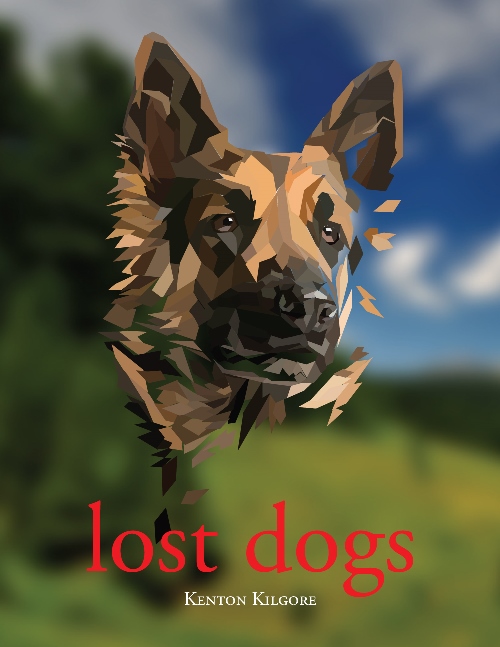
The cover went through several iterations before I settled on the one above. Because the story takes place on Kent Island, in the Chesapeake Bay, it almost looked like this:

I changed the cover in 2020 because I wanted to match it up with the artwork for Stray Cats. By that time, James had moved on from doing book covers, so at first, I considered doing it myself, using the main image that James had created. Like so:

Fortunately, I quickly realized my artistic limitations, and turned to another professional. Alas, her first concept was a little too…twee for my tastes.

Eventually, she got the covers for both books down (with a last-minute assist from James for the print version of Stray Cats). I love how they complement each other with the color palette, fonts, background images, and animals.

More About Lost Dogs
This post is just the latest I’ve done about Lost Dogs. Previously, I’ve discussed:
- Creating the Characters From Lost Dogs and Stray Cats (link to podcast interview)
- How I Came To Find Lost Dogs (more about the book’s origin)
- Lost Dogs: The Alternate Ending (sign-up link to receive a free version)
- Getting Lost Again (Revisiting Lost Dogs with the writing of Stray Cats)
- Talking Dogs and Dragons (link to TV interview)
- The Lost Dog We Brought Home (the real-life inspiration for Sally)
- Lost Dogs on “Papa’s World” (link to TV interview)
When I first published Lost Dogs, I was happy with how it turned out, but I didn’t think it was anything special. If you had asked me then, I would have told you, “It’s pretty good.”
Ten years later, I still think so (though, IMHO, This Wasted Land is much better), but I understand the deep emotional attachment that readers have made with it. I still find it very powerful. If you cried while reading certain parts, you should know that I cried writing many of those parts (the bit where Audrey tells Buddy that he’s her best friend gets me EVERY DARN TIME).
If you read Lost Dogs, either 10 years ago, or just the other day, thank you very much; I hope you enjoyed it. Lost Dogs changed my life, and maybe it changed yours, too.
Kenton Kilgore writes books for kids, young adults, and adults who are still young. Follow Kenton on Facebook for frequent posts on sci-fi, fantasy, and other speculative fiction. You can also catch him on Instagram.
