
I was so busy at the beginning of the summer finishing up and releasing Stray Cats, my latest book, that I overlooked the ten-year anniversary of issuing Dragontamer’s Daughters, my first published novel.

That’s nothing new: of my four works, it’s the one that has always attracted the least attention. Nowhere near as popular as Lost Dogs, not as quirky and fun as Stray Cats, not as riveting as This Wasted Land, poor DTD is often an afterthought.

That’s a shame, because I think it’s one of the best things I’ve ever written.
Dragontamer’s Daughters—the story about two sisters who find a small dragon that’s been hurt—started off as a bedtime tale for my girls when they were little. It was only a few pages at first, but as they got bigger, so did it, eventually growing to more than 600 pages.
After striking out with getting it released traditionally, I split the story in half and self-published DTD Part 1: Pearl, and DTD Part 2: Stormcaller, in June 2012. It made a small splash, selling a few hundred copies of each volume, but was immediately outshone by my 2014 novel, Lost Dogs.
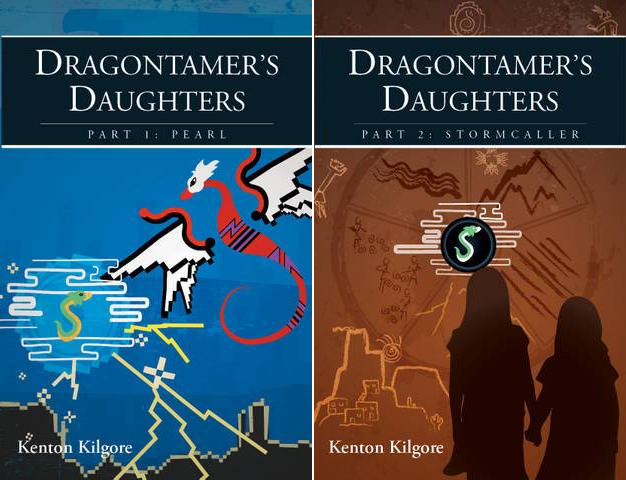
Dissatisfied with its sales and how some parts of it had turned out, I revised DTD in 2015, coalescing the story into a single book with new cover art. I thought (and several reviewers agreed) that the previous version was a little slow, particularly in the beginning, so I cut about 80 pages. It’s still a long book (540 pages in print), but it moves a bit more quickly.

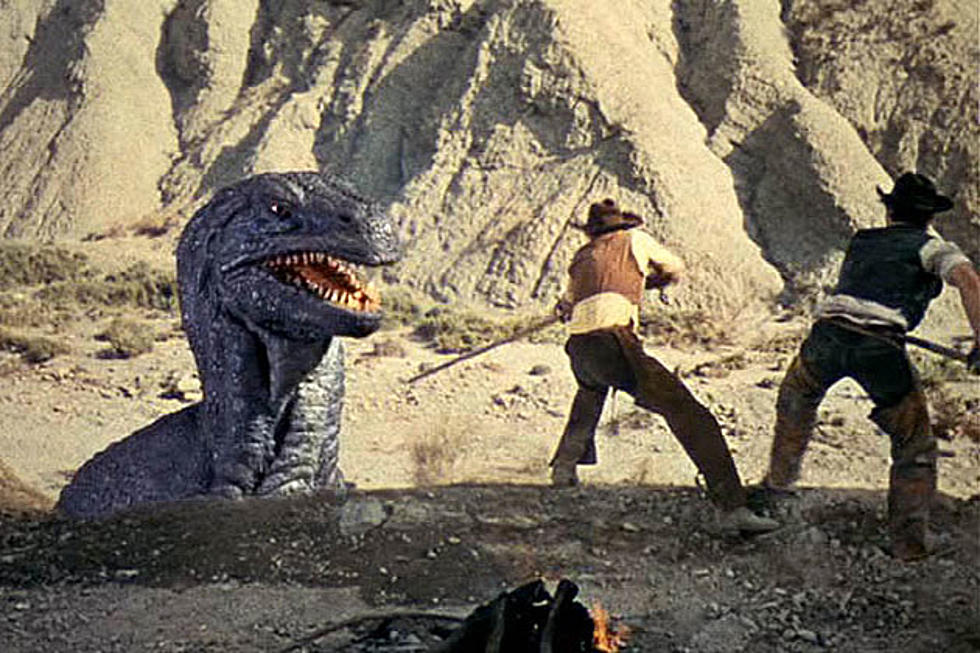
Even with those upgrades, DTD has never been a big hit, and that’s understandable, given its sub-genre. It’s a “Weird Western,” in the vein of The Valley of Gwangi film, or The Wild Wild West TV series. I think of it as Little House on the Prairie…with dragons.
Here’s what I think makes DTD so good….
The Characters
Literary folks often toss around the term “strong female character,” but in many stories I’ve seen and read, that just means a woman acting like a man: shouting, cursing, and browbeating; fighting, kicking down doors, flipping over tables, etc.
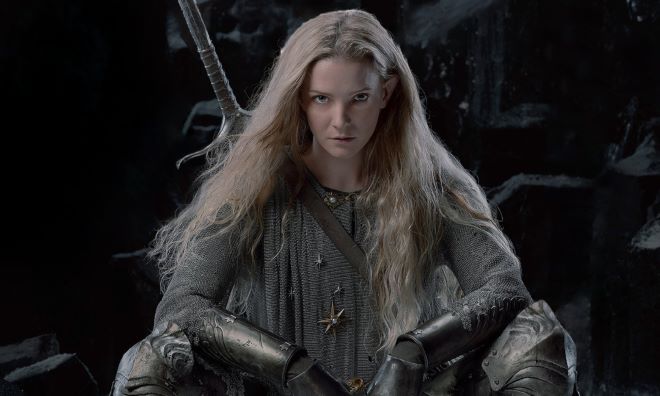
Instead, the women and girls of DTD show their strength through their femininity. Alijandra, the younger daughter, loves animals, and will do whatever she can to save the life of the dragon she calls “Pearl.” Isabella, the older sister–no longer a little girl, but not yet a woman–is letting go of her childhood fancies as she begins to understand and uneasily take on the responsibilities of adulthood.
Their mother, Juanita, provides for, nurtures, and protects her family while her husband is away seeking their fortune. The native woman To-Ho-Ne has set aside thoughts of what might have been to tend to those she has now. And while Governor Guzmarr is determined to see justice done, she also knows when it would be best to listen and empathize with others.
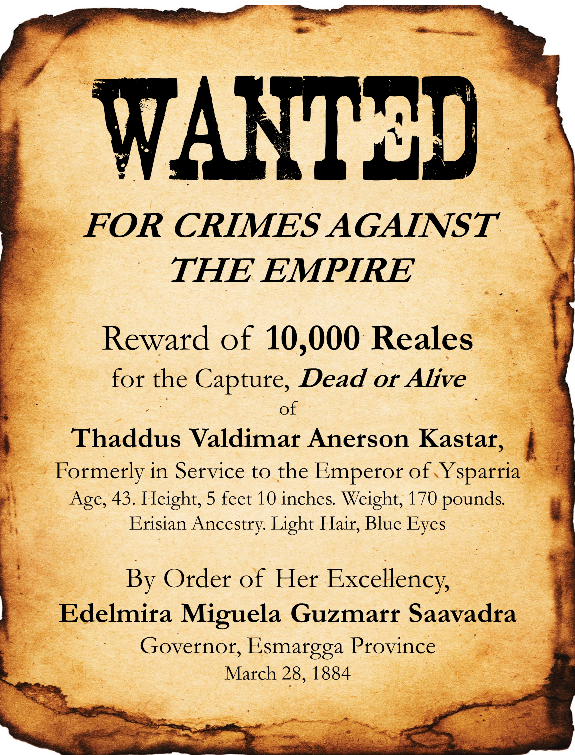
All the characters, major and supporting, are complex. Thad, the father and titular dragontamer, is flawed and has failed before, but he perseveres in trying to pull his family up from poverty. The priest Daon Raul is kind but shrewd. The Diheneh warrior Ahiga is a contemptible bigot and bully, yet is brave, and touchingly loyal to the dragontamer and his daughters.

The Dragons
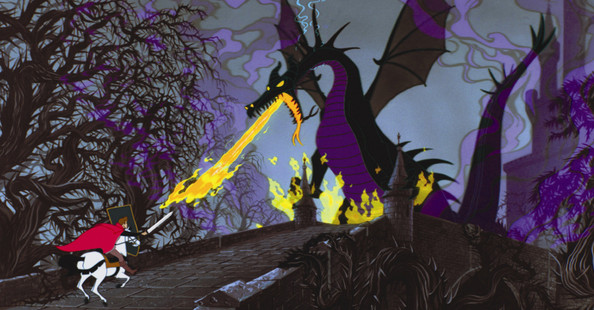
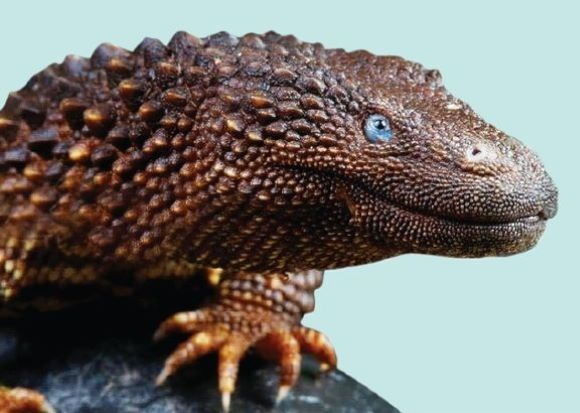
In DTD, there are no fire-breathing monsters lying on piles of gold, waiting for heroes to come along and slay them. Instead, they’re both entities out of myth and legend, deeply connected to the world and the elements, who are nevertheless living, breathing, intelligent creatures with their own, unique abilities.
The main one is Pearl, a small, wingless dragon named by Alijandra for the shape and color of her eyes.* The girls find her gravely wounded after a fight with another dragon, and over time, they learn her secrets and witness her immense power. DTD asks, can they save her life? And can she save their family?
*Her name is also an allusion to John Steinbeck’s novella, The Pearl.
The World-Building
DTD takes place in the Old West of an alternate Earth. Two great powers—Erisia, known for its steampunk technology and advanced weapons—and Ysparria—a continent-spanning empire—compete for dominance, with the native people caught between them.

Of the natives, the Diheneh are most prominently featured in the story. A proud and ancient people, compassionate to strangers but merciless to their enemies, they defend their lands from the Erisians and other tribes by magic and alliances with mighty dragons. I patterned the Diheneh after the Navajo, going so far as to incorporate Navajo language into some of their dialogue.

Ysparria is the homeland of Juanita, Daon Raul, and the primary antagonist, Governor Guzmarr. An analogue to the Spanish Empire in the New World, Ysparria was founded by the people of Imbyrria, an island nation destroyed by a mega-typhoon hundreds of years before the story begins. The history of Imbyrria and the politics of Ysparria drive Dragontamer’s Daughters to its tumultuous climax.
The Themes
DTD considers the question of money, what it means to you, and what you’ll do for it (another touchpoint between this book and Steinbeck’s). What lines are you willing to cross? How much are you prepared to give up? And will having more make you happy if what you did to get it costs you dearly?
The book also contrasts the illusions of childhood with the realities of adulthood. Two of my favorite instances of this are when the girls’ parents take turns telling bedtime stories about their lives: how the mother met their father; and how he learned to tame dragons. The stories they tell are enchanting, innocent, and delightful. What actually transpired (as the readers learn) is considerably more realistic and nuanced, even dark.
What Others Said
I’m awfully proud of Dragontamer’s Daughters, and most of those who have read it have greatly enjoyed it. As of this writing, its reviews on Amazon are averaging 4.4 stars out of 5. Here are what some readers have said:
“A dazzling tapestry of words and creativity in a world unlike any I’ve read before. The characters are real and engaging; the dragons are diverse and fascinating.”
Goodreads Reviewer
“Kilgore has taken great pains to develop the main characters within the family and all of them are well-rounded with distinct personalities. The author has created strong female role models.”
SUn mountain reviews
“As fantasy goes, this is one of the most captivating I’ve read in a long time. These dragons are incredibly vivid and powerful. There are several different species and they’re developed to the point that you can actually visualize their smell and texture. The portrayal of the dragons alone makes this a worthwhile read.”
Amazon reviewer
“This is young fantasy at its best.”
tome tender book blog
Elements of it crossover into my 2018 novel This Wasted Land, and Isabella and Alijandra appear again, five years after the events of DTD, in my book Stray Cats.

If you haven’t read Dragontamer’s Daughters, you can find it in softcover and for Kindle here. If you have read it, tell someone about it, and join me in celebrating its 10-year anniversary.
Kenton Kilgore writes killer SF/F for young adults and adults who are still young. Follow Kenton on Facebook for frequent posts on sci-fi, fantasy, and other speculative fiction. You can also catch him on Instagram.